Theo: A Steampunk Typeface That Tells a Story
Imagine a font that doesn't just display letters, but whispers tales of brass automata, intricate clockwork, and gaslit workshops. This is the world of Theo, a display typeface that transcends mere text to become a narrative element in your design. Engineered for precision and aesthetic splendor, it’s not for every project, but for the right one, it’s an irreplaceable tool for crafting a specific, immersive atmosphere. If your creative vision involves Victorian machinery, fantasy realms, or any blend of industrial grit with ornate elegance, understanding how to wield a specialized font like this can be the key to unlocking your project's full potential.
The Anatomy of a Mechanical Masterwork
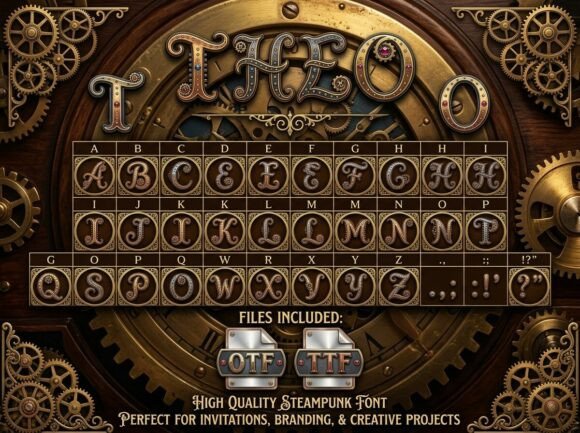
What sets Theo apart in a sea of decorative fonts is its commitment to a cohesive design philosophy. Each character isn't just shaped like a letter; it's constructed as a miniature piece of handcrafted machinery. You'll find subtle clockwork gears integrated into the curves of a 'C' or 'S,' tiny rivets lining the stems, and the occasional glint of a gemstone accent on a terminal. The letterforms feel substantial, with a weight that suggests they were cast in a foundry rather than typed on a keyboard. This creates an incredibly textured and rich visual experience, making it a standout choice for projects where the typography itself needs to be a focal point.
As a premium font, it's crucial to recognize its role. Theo is a quintessential display font—a typeface designed for headlines, logos, and short bursts of impactful text, not for setting long paragraphs. Its ornate details, which are its greatest strength at large sizes, would become visual noise and hinder readability in body copy. This distinction is fundamental to using it effectively. Think of it as the stunning centerpiece of a clock, not the gears that do the background work. For the supporting text in your designs, you'll want to pair it with a clean, simple sans serif font or a highly legible serif font to create balance and ensure your message is communicated clearly.
Where Precision Meets Imagination: Practical Applications
The true value of a specialized typeface like Theo is realized when its unique personality aligns perfectly with a project's goals. Its steampunk-inspired aesthetic isn't a limitation but a powerful tool for targeted storytelling. Consider these real-world scenarios where it can transform a design from good to unforgettable.
- Branding & Logo Design: For a boutique watchmaker, a craft brewery with a Victorian theme, or a company specializing in artisanal leather goods, Theo offers an instant sense of heritage, craftsmanship, and mechanical precision. It builds a brand identity that feels established and full of character.
- Editorial & Packaging Design: Imagine the cover of a fantasy novel featuring airships and clockwork dragons, or the label for a "Steam-Powered Stout." Theo sets the tone before a single word of the story or product description is read. It’s equally effective for packaging design that needs to stand out on a shelf with a distinct, tactile feel.
- Events & Invitations: An escape room with a "Mad Inventor's Lab" theme, a fantasy-themed wedding, or a high-concept gala can use Theo on invitations, posters, and social media graphics to build anticipation and establish the event's immersive world from the very first point of contact.
- Digital & Print Materials: While not for body text, it can be powerfully used on websites for hero banners and section headers, on posters for impactful titles, and on merchandise like t-shirts or mugs where a bold, graphical statement is desired. It helps in creating visual consistency across all touchpoints of a campaign.
A Practical Guide to Using Ornate Typography
Integrating a font with such a strong personality requires a thoughtful approach. The goal is to harness its power without overwhelming your audience or compromising the clarity of your message. Here’s how to use a typeface like Theo with professional finesse.
Master the Art of Font Pairing. This is the most critical skill. Theo demands a quiet, supportive partner. Look for a modern sans serif font with clean lines and generous spacing—think fonts like Montserrat, Lato, or Open Sans. A classic, readable serif like Georgia or Times New Roman can also work for a more traditional feel. The contrast between the ornate display font and the simple body font creates a dynamic and professional hierarchy. Always test your pairings by setting a sample headline and paragraph to see how they interact on the page.
Prioritize Readability and Context. Always consider your audience and medium. Is the text being viewed on a small mobile screen or a large printed poster? For digital use, ensure there is enough contrast between the text color and the background. For print, the quality of the paper can affect how the fine details of the font render. If the details start to merge or look muddy at a certain size, you've found its readability limit for that context.
Explore the Included Font Styles. A well-crafted commercial font family often includes more than one style. Check if Theo comes with variations like a bold weight, an italic, or a condensed version. These can provide valuable flexibility for creating emphasis and structure within your design system while maintaining the core aesthetic.
Understand Your License. Before using any design asset in a commercial project, always review the licensing agreement. Ensure the license covers your intended use, whether it's for a client's logo, printed merchandise, or a digital product for sale. This is a non-negotiable step for any creative entrepreneur or professional designer.
Choosing Your Tools with Intent
Ultimately, selecting a typeface is a strategic decision that communicates as much as the words themselves. A font like Theo isn't just a stylistic choice; it's a commitment to a particular visual narrative. It appeals to designers, small business owners, and content creators who want to build a world around their brand or project, not just a logo. It’s for those who appreciate that typography can evoke emotion, establish setting, and convey a sense of meticulous craftsmanship.
When you choose a font with such a distinct personality, you're making a promise to your audience about the experience they're about to have. You're signaling that this isn't a generic offering, but something built with care, detail, and a touch of fantastical history. In a crowded marketplace, that kind of intentional, story-driven design is what captures attention and builds lasting recognition. So, if your next project calls for the whir of gears and the glow of polished brass, a tool like Theo might just be the precision instrument you need to bring it to life.