Grass: The Display Typeface That Plays a Visual Symphony
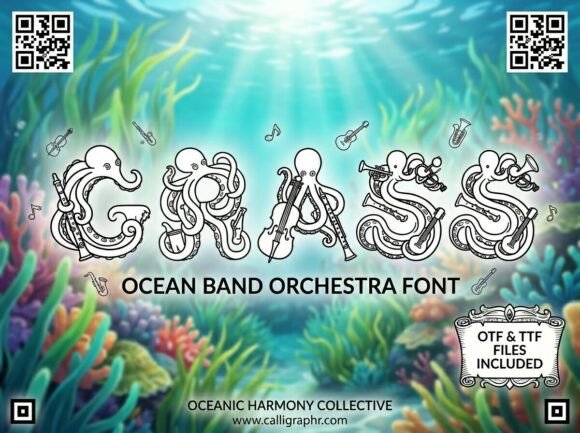
Imagine a font where the letterforms aren’t just shapes, but stages. Where the counter of a ‘B’ holds a cello, and the opening of an ‘O’ frames a flute. This isn’t a daydream; it’s the reality of Grass, a whimsical display typeface that merges bold, hollow characters with the playful artistry of hand-drawn octopuses engaged in a marine orchestra. It’s a design asset that doesn’t just sit on a page—it performs.
A Font with a Musical-and-Multitasking Soul
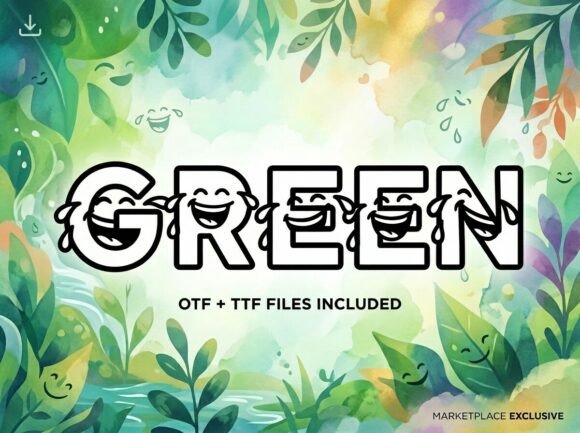
At its core, Grass is a premium font designed for impact and personality. Each character is meticulously crafted with a heavy illustrative weight, creating bold, hollow letterforms. Within these negative spaces, charming octopus characters interact with various orchestral instruments—cellos, flutes, trumpets, and more. This integration transforms typography into a cohesive illustration, giving each word a narrative quality. It’s a modern typography solution that feels hand-crafted and full of life, ideal for projects that demand a second look.
The visual appeal lies in its dual nature. From a distance, it reads as a strong, confident display font. Up close, the intricate details reveal a story, inviting viewers to explore each character. This makes it particularly effective for applications where engagement is key, such as social media headers, event posters, or product packaging that needs to stand out on a shelf.
Where Rhythm Meets the Reef: Practical Applications
The true value of any creative font is measured by its utility. Grass isn’t just a novelty; it’s a versatile tool for specific branding and design scenarios. Its "rhythmic-and-reef-ready" aesthetic makes it a natural fit for businesses and projects in the creative, aquatic, or entertainment spaces.
- Branding & Logo Design: For an independent aquarium, a children’s music school, or a marine-themed café, this typeface can form the cornerstone of a brand identity. A logo set in Grass instantly communicates whimsy, creativity, and a playful spirit. It’s a creative font choice that helps a brand tell its story visually from the first glance.
- Packaging & Merchandise: Picture the label on a bottle of artisanal sea salt, the sleeve of a children’s audiobook, or the design on a tote bag for a marine conservation nonprofit. The illustrative quality of Grass adds a tactile, artistic feel to physical products, enhancing perceived value and shelf appeal.
- Social Media & Digital Presence: In the fast-scrolling world of Instagram or TikTok, a striking header image is crucial. Using Grass for a YouTube channel banner or a series of promotional graphics can create a memorable, consistent visual thread. Its bold structure ensures readability even at smaller sizes in social media graphics, while the details reward closer inspection.
- Print & Editorial Design: Think beyond digital. This typeface shines on event posters for a school play, cover art for a children’s magazine, or chapter headings in a whimsical novel. In editorial design, it can be used sparingly for pull quotes or section titles to inject energy and guide the reader’s eye.
Making It Work: Pairing and Practicality
Introducing a highly stylized font like Grass into a project requires a thoughtful approach. Its strength is its personality, which means it shouldn’t be used for body copy. The goal is to let it shine as a headline or accent, supported by complementary typography.
Choosing the Right Partner: The key to successful font pairing is contrast. A clean, simple sans serif font or a neutral serif font for body text will create a harmonious balance, allowing the display font to command attention without causing visual clutter. Avoid pairing it with other ornate script or handwritten fonts, as this can quickly become chaotic.
Readability Considerations: Always test your chosen typeface in context. While the bold forms of Grass offer good readability for short headlines, ensure the octopus details don’t obscure the letter shape at the intended viewing size. For a website hero banner, it might be perfect. For a long, narrow sidebar, a simpler weight might be necessary.
Licensing and Usage: Before finalizing a design for a client or commercial product, review the font’s licensing. Most premium fonts come with clear terms for commercial use, but it’s a critical step in professional practice to ensure your design assets are properly licensed for their intended application, whether for a local business logo or a national marketing campaign.
Infusing Character into Creative Projects
For designers, small business owners, and content creators, typography is a silent ambassador for a brand’s personality. Choosing a typeface like Grass is a deliberate decision to inject joy, creativity, and a specific narrative into a project. It moves a design from being merely functional to being experiential.
Consider using it for:
- Invitations & Event Materials: A child’s aquarium-themed birthday party, a community orchestra fundraiser, or a creative workshop. The font itself sets the tone and builds excitement.
- Digital Products & Marketing Assets: The cover for a downloadable activity book, the title slide for an online music lesson, or the header for an email newsletter about marine biology. It helps digital products feel tangible and special.
- Blog & Website Headers: A blog focused on creative education, ocean conservation, or family travel could use Grass for its main title or section headers to instantly establish its unique voice and aesthetic.
In a landscape filled with minimalist sans serifs and elegant scripts, Grass offers a distinct alternative. It’s a handwritten font that feels both artistic and intentional. It challenges the notion that a typeface must be neutral, instead proposing that it can be a central character in a visual story. For the right project, this isn’t just a font choice—it’s the foundation of an unforgettable visual identity.