Sebastian: The Marquee Font That Commands the Stage
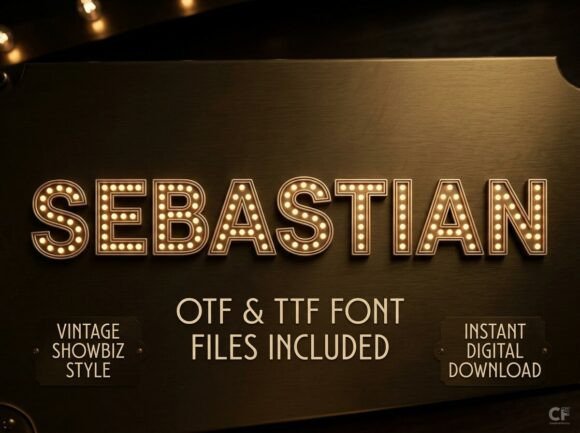
Picture this: you're walking down a dimly lit theater district street, and suddenly a brilliant marquee sign illuminates the night sky. Those iconic bulbs spell out a show title that practically shouts "this is important, this is worth your attention." That's the exact energy Sebastian brings to your design projects. This isn't just another display font collecting digital dust in your library. It's a full-blown personality that transforms ordinary text into a visual event, complete with the nostalgic warmth of vintage lightbulbs and the bold confidence of classic Broadway signage.
Why This Typeface Feels Like a Headliner
Sebastian works because it taps into something we all recognize instantly: the magic of show business. The blocky, substantial letterforms feel sturdy and commanding, while those carefully crafted lightbulb details add a layer of tactile realism you rarely see in digital fonts. Each character looks like it was hand-assembled on an actual marquee board, giving your designs an authenticity that generic display fonts simply can't replicate. The thick structure ensures legibility even at smaller sizes, while the decorative bulb motifs create visual interest that draws the eye without overwhelming your message.
What makes Sebastian particularly useful for designers and business owners is its versatility within its specific aesthetic. Yes, it's theatrical. Yes, it's bold. But that doesn't limit it to playbills and movie posters. The vintage entertainment vibe works surprisingly well across industries that want to communicate excitement, celebration, or premium quality. Think about how a restaurant might use it for a grand opening announcement, or how a podcast could leverage it for episode artwork that stands out in crowded feeds.
Putting Sebastian to Work Across Your Projects
Let's talk practical applications, because a font is only as valuable as the projects it improves. For logo design, Sebastian shines as the primary wordmark for businesses in entertainment, hospitality, events, or any brand wanting to project confidence and spectacle. A boutique event planning company, a vintage-inspired clothing line, or a specialty cocktail bar could build their entire brand identity around this typeface. The key is pairing it thoughtfully with a clean sans serif font for body text, creating a hierarchy that feels dynamic rather than chaotic.
Packaging design offers another fantastic opportunity. Imagine Sebastian on a limited-edition product box, a craft beer label, or a gourmet popcorn bag. The font immediately signals that what's inside is special, premium, and worth savoring. For social media graphics, it creates scroll-stopping headers and announcement posts that cut through algorithm noise. Instagram stories, YouTube thumbnails, and Pinterest pins all benefit from typography that feels like an event rather than just words on a screen.
For those working in editorial design or web design, Sebastian works beautifully as a headline or section divider. A lifestyle blog covering entertainment, travel, or dining could use it for article titles that set an adventurous tone. Magazine layouts, particularly those with a retro or entertainment focus, gain instant character when Sebastian headlines a feature spread. Even print materials like event posters, theater programs, and invitation cards transform from mundane to memorable with this font leading the visual conversation.
Smart Typography Choices for Real-World Results
Choosing the right font style for a project starts with understanding your audience and your message. Sebastian communicates spectacle, nostalgia, and bold confidence. If your project aims to feel quiet, minimalist, or understated, this probably isn't your match. But if you want to create excitement, celebrate a milestone, or position something as a premium experience, you've found a powerful tool. Consider your brand recognition goals carefully. A distinctive display font like this becomes part of your visual signature when used consistently, making your materials instantly identifiable across platforms.
Readability considerations matter with any decorative typeface. Sebastian's bulb details add character, but they also introduce visual complexity. Reserve it for headlines, titles, and short bursts of text where impact matters more than extended reading comfort. For longer passages, body copy, or detailed information, pair it with a highly legible serif font or sans serif font that handles the heavy lifting. This contrast actually strengthens both typefaces, letting Sebastian's theatrical flair pop against a quieter backdrop.
Testing font pairings before committing to a final design saves headaches later. Try Sebastian alongside a few different companion fonts and evaluate how they interact at various sizes. Does the weight balance feel right? Does the companion font compete for attention or complement the display face? A geometric sans serif often pairs well, offering modern clarity that grounds Sebastian's vintage exuberance. Script fonts and handwritten fonts can also work for specific aesthetics, though the combination demands careful spacing and sizing to avoid visual clutter.
Beyond the Bulbs: Building a Complete Visual System
A premium font like Sebastian typically comes with multiple styles and weights that expand your creative options. Review the included variations carefully. Does it offer an outline version for layered effects? Are there alternate characters or ligatures that add flexibility? Understanding what's in the package helps you maximize value and create more sophisticated designs. Some premium typefaces include matching icon sets or decorative elements that coordinate with the letterforms, which can streamline your workflow when building cohesive marketing assets.
Commercial licensing deserves attention before you deploy any font in client work or products for sale. Read the license terms to understand permitted uses, whether that covers digital products, physical merchandise, or both. Most reputable font licenses distinguish between personal and commercial use, and some require extended licenses for specific applications like app development or large-scale distribution. Knowing these details upfront protects you legally and ensures your design assets are properly cleared for their intended purpose.
Think about how Sebastian fits into your broader creative font strategy. No single typeface handles every design need, so build a small, curated collection that covers your most common projects. Sebastian handles the bold, attention-grabbing moments. A reliable modern typography family handles the everyday text. Maybe a complementary script font adds elegance for special occasions. Together, they give you a flexible toolkit that maintains visual consistency while adapting to different contexts and communication goals.
The real power of a font like Sebastian lies in its ability to make people feel something before they've even read the words. That emotional response drives audience engagement in ways that analytics can measure but can't fully explain. When your typography communicates the right energy, people linger longer, share more often, and remember your message. Whether you're designing a one-time event poster or building a lasting brand presence, choosing typefaces that align with your project's emotional core creates connections that go deeper than surface-level aesthetics. Sebastian delivers that theatrical spark with every letter, turning your designs into experiences worth noticing.