Gurne Grave: A Typeface for Haunting Narratives and Dark Branding
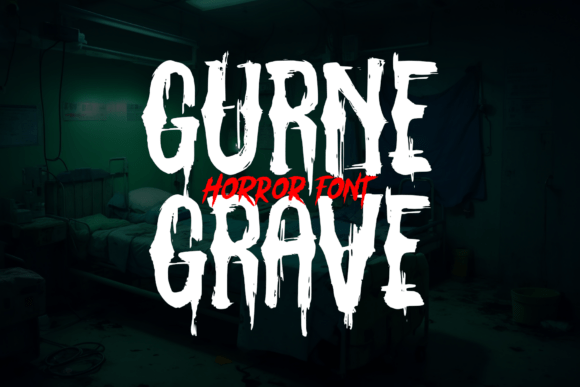
There are moments in design when you need more than just letters on a page. You need atmosphere, a whisper of dread, a visual cue that something lurks just beneath the surface. That's where a specialized display font becomes not just a choice, but a character in itself. Gurne Grave is precisely that—a typeface that doesn't just spell words; it etches them into stone, carves them into old wood, and leaves behind the unsettling impression of a secret long buried. Its sharp, chiseled forms are less about legibility in the traditional sense and more about evoking an immediate, visceral reaction.
Unearthing the Visual DNA of This Horror Typeface
At first glance, the personality of Gurne Grave is unmistakable. This isn't a font for cheerful announcements or friendly blog headers. Its design language is built on tension and mystery. Imagine the jagged edge of a broken tombstone, the frantic scratch of a claw on a wooden door, or the precise, deliberate inscription on an ancient, cursed artifact. Each character in this creative font carries a weight, a sense of history—and not a pleasant one. The lines are sharp, often irregular, creating a texture that feels hand-carved and weathered. This makes it a powerful premium font for projects where you want the typography itself to tell a story of suspense, horror, or gothic elegance.
Where This Font Finds Its Dark Purpose
Understanding the specific applications for a font like Gurne Grave is key to using it effectively. Its strength lies in headlines, logos, and short, impactful text where its intricate details can be appreciated without compromising clarity. For branding, it's a perfect match for niche businesses: a haunted attraction, a metal band, a specialty brewery with a dark theme, or a publisher of horror novels. The font becomes a cornerstone of the brand identity, instantly communicating the core theme before a single word of copy is read.
Consider its utility in packaging design. A craft beer with a name like "Midnight Stout" or a hot sauce branded as "Ghost Pepper Elixir" would benefit immensely from a label set in Gurne Grave. It adds a layer of perceived artistry and darkness that aligns with the product's promise. In digital spaces, it can transform a social media graphic for a Halloween event or a true-crime podcast into something far more engaging. The font acts as a visual hook, stopping the scroll and setting the mood instantly. For web design, it can be used sparingly for hero section titles or navigation links on a site for a horror film festival, creating immediate thematic cohesion.
Pairing and Practicality: Making It Work
The true test of a strong display typeface is how well it plays with others. Gurne Grave, with its extreme personality, requires careful font pairing to remain effective and not overwhelming. A general rule is to let it be the star. Pair it with a clean, neutral sans-serif font for body text. Think of a sturdy, readable typeface like Open Sans, Lato, or Montserrat. The contrast is essential: the horror font delivers the emotion, while the sans-serif ensures the supporting information is accessible and easy to digest. This balance maintains professional presentation and ensures your audience can engage with the content, not just the style.
Before committing, always test your pairings. Write out a mock headline and a paragraph. See how they interact on screen and in print. Check the readability of the Gurne Grave letters at the size you intend to use—some of its finer details might be lost at very small sizes, reinforcing its role as a headline or logo font. This kind of practical testing is a hallmark of good design work, saving you from costly revisions later.
Beyond the Screen: A Multilingual Asset with Depth
What elevates a good design asset to a great one is its versatility and robustness. Gurne Grave isn't just a set of basic English letters. It arrives as a complete package, including OTF and TTF files for broad compatibility, standard glyphs, and web font formats for digital projects. Crucially, its multilingual support covers a vast array of languages—from Afrikaans and Albanian to Oromo and Portuguese. This isn't just a technical spec; it's a practical benefit. If your brand or client work has an international reach, or if you're creating designs for a European market, you won't be limited by missing characters or accents. This level of completeness speaks to a thoughtfully crafted commercial font, ready for real-world application across PC and Mac systems.
Ultimately, choosing a typeface like Gurne Grave is a strategic decision. It's about selecting a tool that does more than convey information—it shapes perception. It’s for the designer crafting a movie poster that needs to chill to the bone, the entrepreneur building a brand around the macabre, or the content creator producing a digital magazine about unsolved mysteries. In these contexts, typography isn't just decoration; it's a fundamental part of the narrative. By understanding its personality, respecting its ideal use cases, and pairing it wisely, you can harness its haunting power to create designs that are not only seen but deeply felt.