Bay Font: Capturing 70s Psychedelic Whimsy in Your Designs
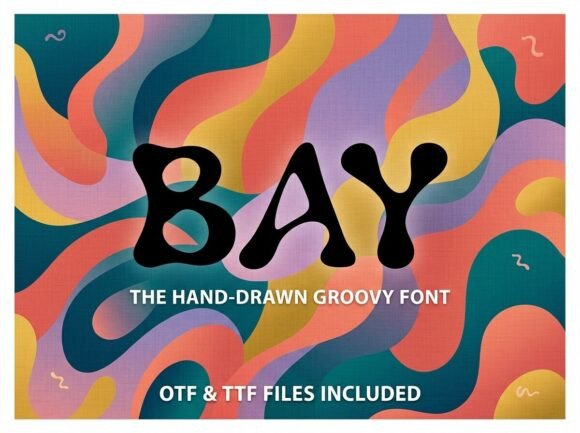
There’s a specific feeling associated with the late 1960s and 70s counterculture—a sense of fluidity, rebellion, and organic warmth that seems to melt off the page. If you’ve been hunting for a way to inject that groovy, handcrafted energy into modern branding or design work, the search often ends with a typeface that understands the assignment. Enter Bay, a premium display font that doesn’t just sit on the canvas; it dances. Designed with heavy, fluid letterforms that mimic the hypnotic motion of a lava lamp, Bay offers a sophisticated yet playful nod to the artistic freedom of the psychedelic era. It moves away from the rigid geometry of modern digital typography, instead embracing a melting baseline and chunky visual weight that feels immediately human and approachable.
The Anatomy of "Groovy" Visuals
What makes a font like Bay work so well in a crowded design landscape is its refusal to be boring. Standard sans-serif fonts are excellent for body copy and corporate legibility, but they often lack the personality required to stop a scrolling thumb or catch an eye on a busy shelf. Bay operates on a different frequency. Its heavy weight gives it a commanding presence, essential for headers and logos, but the "lava-lamp" curves soften that dominance with a sense of playfulness. This is a typeface that feels like it was sketched by hand on a napkin during a coffee break—imperfect in the most charming way possible.
For designers and brand strategists, the appeal lies in the details. The letterforms in this groovy font aren't uniform; they possess an organic rhythm that guides the viewer’s eye across the word. This creates a sense of movement even in static media. Whether you are working on a music festival poster, a creative editorial header, or artisanal lifestyle branding, this typeface bridges the gap between nostalgia and contemporary cool. It suggests that your brand doesn't take itself too seriously, yet maintains a high standard of visual quality.
Practical Applications: Where Personality Meets Purpose
Understanding where to deploy a display font like Bay is key to maximizing its impact. Because of its distinct heavy weight and whimsical curves, it is best suited for high-impact, low-volume text environments. You wouldn't want to write a blog post body in this style, but for the hero section of your website or the logo of a boutique coffee shop, it is unbeatable.
Consider the world of packaging design. If you are launching a line of organic teas, natural skincare, or craft sodas, the font on your label needs to communicate "handmade" and "natural" instantly. Bay does this heavy lifting for you. Its melting baseline suggests a product that is fluid and natural, while its weight implies substance and quality. It is an exceptional choice for merchandise, too. Imagine this typeface on a vintage-style t-shirt or a tote bag; it has the kind of retro aesthetic that people love to wear.
In the realm of digital content and social media graphics, the font shines because of its readability at a glance. Instagram stories, Pinterest pins, and TikTok overlays require fonts that are instantly recognizable. A script font might be too ornate, and a standard serif might be too dull, but Bay strikes a balance. It is bold enough to be read over a busy photo background, yet stylistic enough to set a specific mood—whether that’s a laid-back summer vibe or a creative brainstorm.
Strategic Branding and Font Pairing
Choosing a creative font like Bay is a strategic decision that affects your entire brand identity. It positions your brand as approachable, creative, and perhaps a little nostalgic. However, to maintain a professional presentation, the typography must be balanced. This is where the art of font pairing comes into play.
Because Bay is a heavy, decorative display font, it demands a partner that can step back and let it shine for smaller text. Pairing it with a clean, geometric sans-serif font for your subheadings and body copy is usually a safe bet. The contrast between the organic, hand-drawn curves of Bay and the structured lines of a modern sans-serif creates a visual hierarchy that is easy for the audience to navigate.
Here are a few practical tips for testing your pairings:
- Contrast is King: Don't try to pair Bay with another whimsical handwritten font. It will look cluttered. Use a neutral sans-serif like Montserrat, Open Sans, or Lato to ground the design.
- Scale Matters: Bay works best when it is large. Test your layout by ensuring the headline is the focal point. If the font feels overwhelming, reduce the size slightly or increase the line height (leading) to let the "melting" elements breathe.
- Color Context: This typeface works beautifully with earthy tones, pastels, and high-contrast vintage palettes. Test your color combinations to ensure the heavy letterforms don't bleed into the background color.
Enhancing Audience Engagement and Recognition
In a digital ecosystem saturated with generic templates, visual consistency and brand recognition are your greatest assets. Using a distinct typeface like Bay helps carve out a unique visual space. When a user sees your font style, they should immediately connect it with your brand's voice. This is the essence of strong brand identity.
Furthermore, typography has a psychological impact on audience engagement. A rigid, corporate font might suggest efficiency, but it rarely inspires warmth or excitement. A hand-drawn, groovy font like Bay, however, evokes emotion. It feels human-centric. In an age of AI-generated content and sterile interfaces, that human touch is more valuable than ever. It tells your audience that there are real people behind the brand who value creativity and art.
Whether you are designing digital products, such as downloadable planners or social media templates, or working on editorial design for a magazine, Bay offers a way to break the monotony. It invites the viewer to pause and appreciate the design, which increases the time they spend with your content.
Final Thoughts on Implementation
When integrating a premium font like this into your workflow, always review the licensing terms to ensure they cover your specific commercial use, whether for client work, merchandise, or digital sales. Take the time to explore the full character set; often, display fonts include unique ligatures or alternates that can add extra flair to your logo design.
Ultimately, Bay is more than just a collection of letters; it is a design asset that carries a specific vibe. It is for the brand that wants to feel grounded yet spirited, vintage yet relevant. If your goal is to create a visual identity that feels like a warm handshake or a favorite record spinning on a turntable, this typeface is the perfect starting point. It proves that in the world of typography, personality isn't just a bonus—it's the whole point.